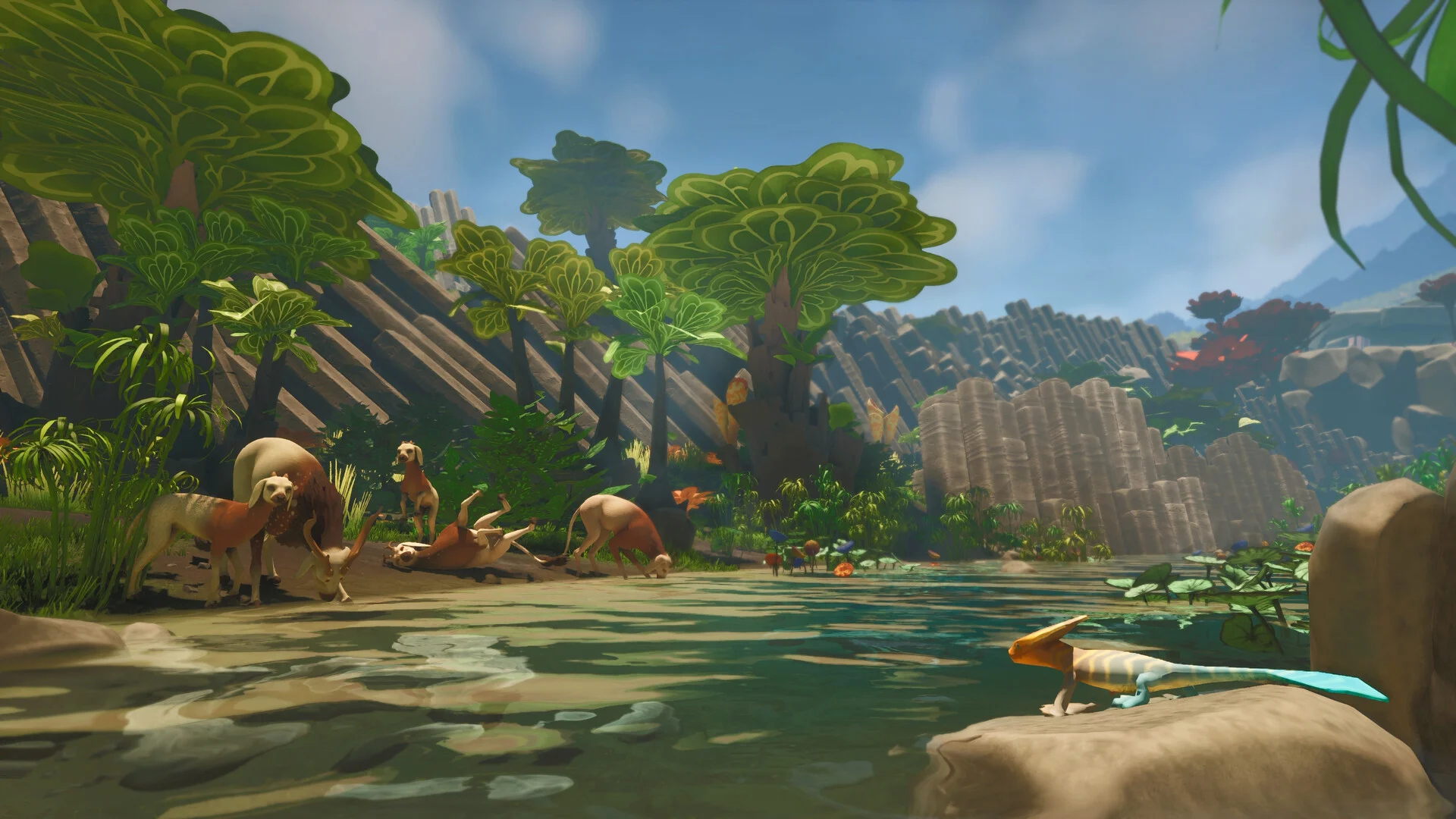
Looking for wool? Start with Lucuma Camilla in Valley fields. For shed horns, look around Headlands stone formations for Imperial Strider. Choose a creature below for its habitat, identifying features and approach risks.
Find a creature
Lucuma Camilla
- Where to look
- Valley · open fields
- How to recognize it
- Long upright neck, arched tail and a golden-brown, alpaca-like coat.
- Research / materials
- Wool from its coat is associated with crafting.
- Before approaching
- Sociable and curious; often found where predators are scarce.
Wild Green Zuma
- Where to look
- Valley · damp watersides
- How to recognize it
- Small green amphibian with red eyes and two antenna-like appendages.
- Research / materials
- Produces a secretion used in crafting.
- Before approaching
- Timid; look beneath rocks and vegetation near cool, damp watersides.
Gum Nibis
- Where to look
- Valley · marshes
- How to recognize it
- Slender brown wading bird with teal wing and tail feathers.
- Research / materials
- Feathers have crafting uses.
- Before approaching
- Territorial around nests near marshes and waterways. Give nesting birds space.
Scorchweaver
- Where to look
- Valley · undergrowth
- How to recognize it
- The survey describes a larger variant but supplies no reliable distinguishing checklist in text.
- Research / materials
- No material is specified in the survey.
- Before approaching
- Hostile in Valley undergrowth. The larger variant defends its territory; the survey advises scanning from a distance.
Imperial Strider
- Where to look
- Headlands · stone cover
- How to recognize it
- Deer-like body, upward-curving horns and a chestnut-to-cream coat.
- Research / materials
- Naturally shed horns are crafting materials; the survey explicitly recommends collecting them when found.
- Before approaching
- Cautious; shelters among stone formations and flees when threatened. Approach slowly.
Bronze Wox
- Where to look
- Headlands · burrows
- How to recognize it
- Small, low-bodied animal with bronze fur and a short gray mane.
- Research / materials
- Fur has crafting uses.
- Before approaching
- Look for burrows near stone formations. It is skittish, but a threatened pack may defend itself together.
Woodback Tortoise
- Where to look
- Headlands
- How to recognize it
- A slow-moving tortoise; the survey supplies no precise subregion.
- Research / materials
- Biological observation; no specific material is named.
- Before approaching
- Docile and predictable, making it a useful observation subject.
Flux Beetle
- Where to look
- Headlands
- How to recognize it
- An insect found across the Headlands; no narrower location is given.
- Research / materials
- Field documentation; no specific material is named.
- Before approaching
- Described as harmless in the survey.
Azurite Lonebid
- Where to look
- Pass · cooler areas
- How to recognize it
- Large blue-coated animal with pale spots and powerful forelimbs.
- Research / materials
- Fur has crafting uses.
- Before approaching
- Look in cooler parts of the Pass. Gentle and curious, with keen hearing; approach steadily.
Thessalika Nango
- Where to look
- Pass
- How to recognize it
- Armored quadruped with a short crest; reptile-like in appearance but classified as a mammal.
- Research / materials
- Naturally shed rigid scales have crafting uses.
- Before approaching
- Solitary and difficult to gain trust. The survey gives no exact habitat within the Pass or tested trust-building steps.
Skittertail
- Where to look
- Pass · open rock
- How to recognize it
- Small, lizard-like creature on rocky terrain and open surfaces.
- Research / materials
- Biological samples for research.
- Before approaching
- Passive; the survey describes it as a non-threatening research subject.
These are eleven documented species, not a complete bestiary. Habitat clues are not guaranteed spawn points. Except for the explicitly described shed materials, the surveys do not give collection controls; material associations are not kill-drop instructions.
Which creatures are safer to observe?
The surveys describe Lucuma Camilla as sociable, Woodback Tortoise as docile, Flux Beetle as harmless and Skittertail as passive. These are useful starting points for observation, not a guarantee that their surroundings are safe.
Give Scorchweaver space, avoid crowding Gum Nibis nests and do not assume a fleeing Bronze Wox is harmless: its pack can defend itself.
Do I need to kill animals for materials?
The Headlands survey specifically describes Imperial Strider horns as naturally shed; the Pass survey describes shed Thessalika Nango scales. Neither requires interpreting the material as a kill drop. For wool, fur, feathers and secretions, the surveys name uses but do not establish the collection action or tool.
Gathering-tool help does not establish animal-harvesting controls.
Looking for Canine Teeth for fertilizer? Read the community ingredient and location reports. Those accounts are separate from the official survey list above; animal identification and exact locations are not independently verified.
How do I scan or gain trust?
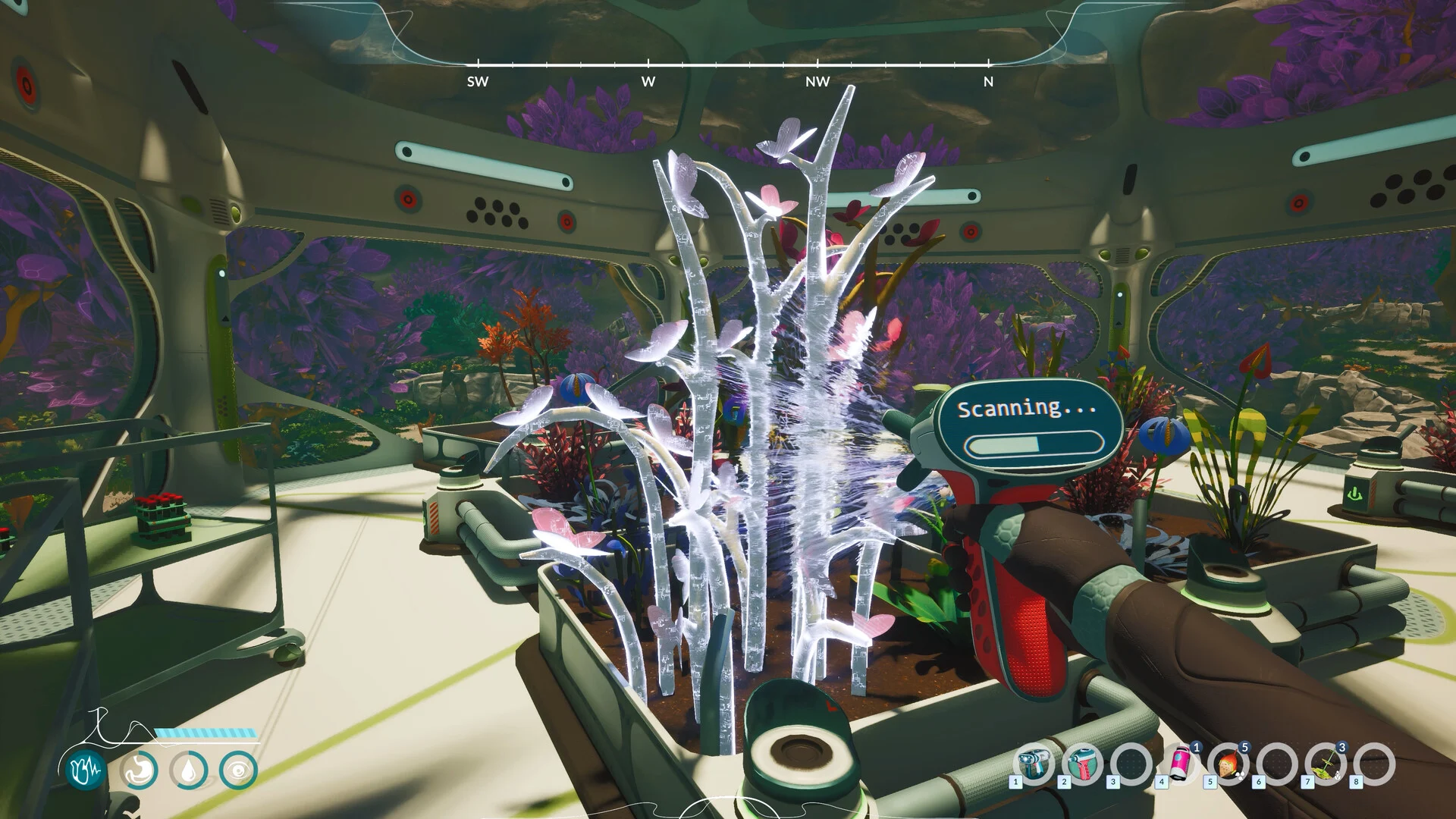
Observe the animal and use the identification shown by your scanner. If assigning the scanner is the problem, check hotbar help. The surveys recommend patient approaches but do not give a reproducible feeding, taming or trust-building sequence.
Animal DNA and hybrid information covers the announced experiment systems.
What if a creature becomes aggressive?
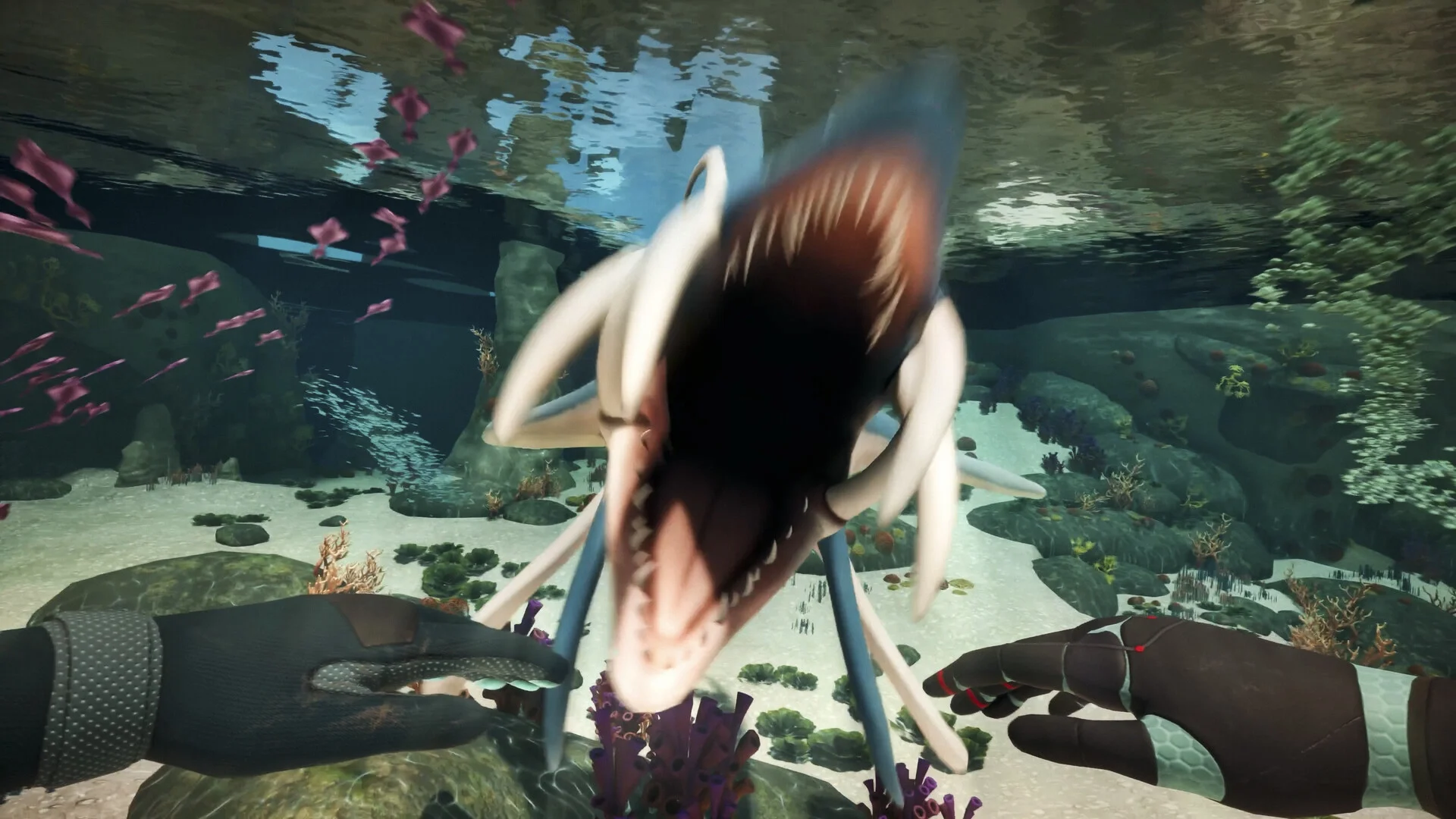
Keep room to retreat rather than moving closer to finish an observation. Wildlife danger and tranquilizer guidance explains the official safety advice and what remains untested about encounters.
Sources & verification
Updated 2026-09-15. Source dates and evidence limits are noted above. This guide is based on published information, not a full-game playtest. Unverified details are identified above.