Looking for a plant or wondering whether it is safe to eat? Start with these nine plants described in the official field surveys. They are a documented selection, not every plant in the game.
Plant field reference
| Plant | Where to look | What the survey tells us |
|---|---|---|
| Sunbeam Lumus | Valley · open clearings | Raw fruit helps with thirst; little nutrition. |
| Sweet Tarax | Valley · open spaces | Juicy, nutritious; fibrous stems used for textiles. |
| Ice Bonebell | Valley · Red Forest | Minor healing effect; often near predator nests. |
| Green Naga | Headlands · marshes and lakes | Poisonous raw; needs processing. |
| Ebony Linter | Headlands · wetlands | Poisonous raw; a processed crafting resource. |
| Cobalt Sargent | Headlands · caves | Edible; tea ingredient with IM-X properties. |
| Earth Filoy | Pass · clay uplands and lakes | Fruit can be eaten raw for nutrition. |
| Prism Nut | Pass · forest pockets | Fat-rich, but increases thirst quickly. |
| Noon Nillow | Pass · chalk soil | Pink-flowered; no human stimulant effect reported. |
How to approach an unfamiliar plant
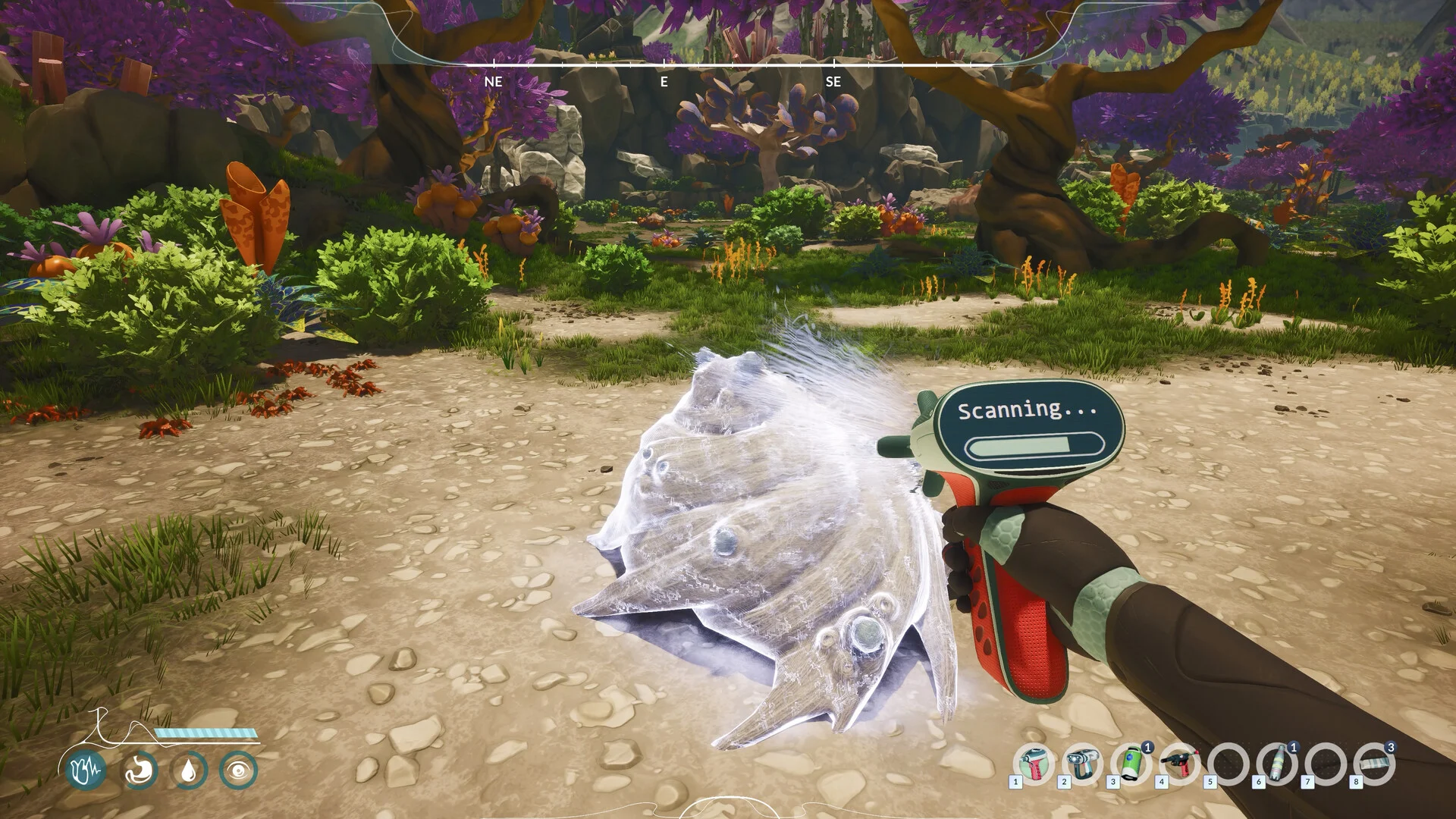
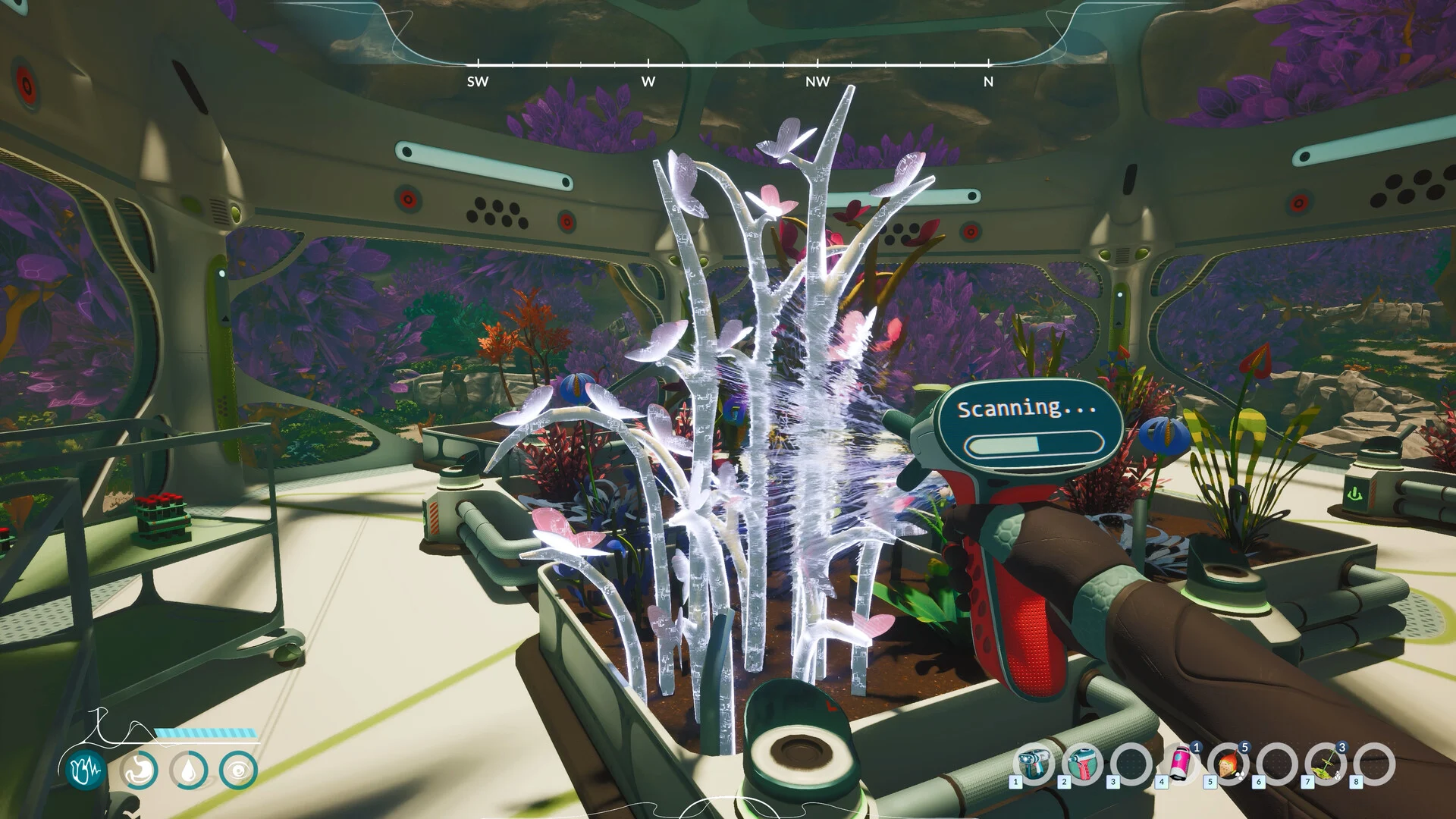
- Scan or inspect it using the prompts available in your game.
- Note the displayed name instead of identifying it by color alone.
- Check the required interaction or gathering tool.
- Record the location in relation to a recognizable landmark.
Collecting plant samples
Having the right gathering tool equipped matters. The developer’s explanation of the pruner and trowel says these tools are used through interaction rather than by holding them like a weapon. Read the tool guide.
Plants and hybrid research
For the confirmed mechanics and a useful experiment-recording format, see Crossbreeding. This guide does not claim to be an exhaustive plant database; exact species locations and tested combinations need in-game verification.
Sources & verification
Sources checked September 8, 2026. This guide is based on published information, not a full-game playtest. Unverified details are identified above.