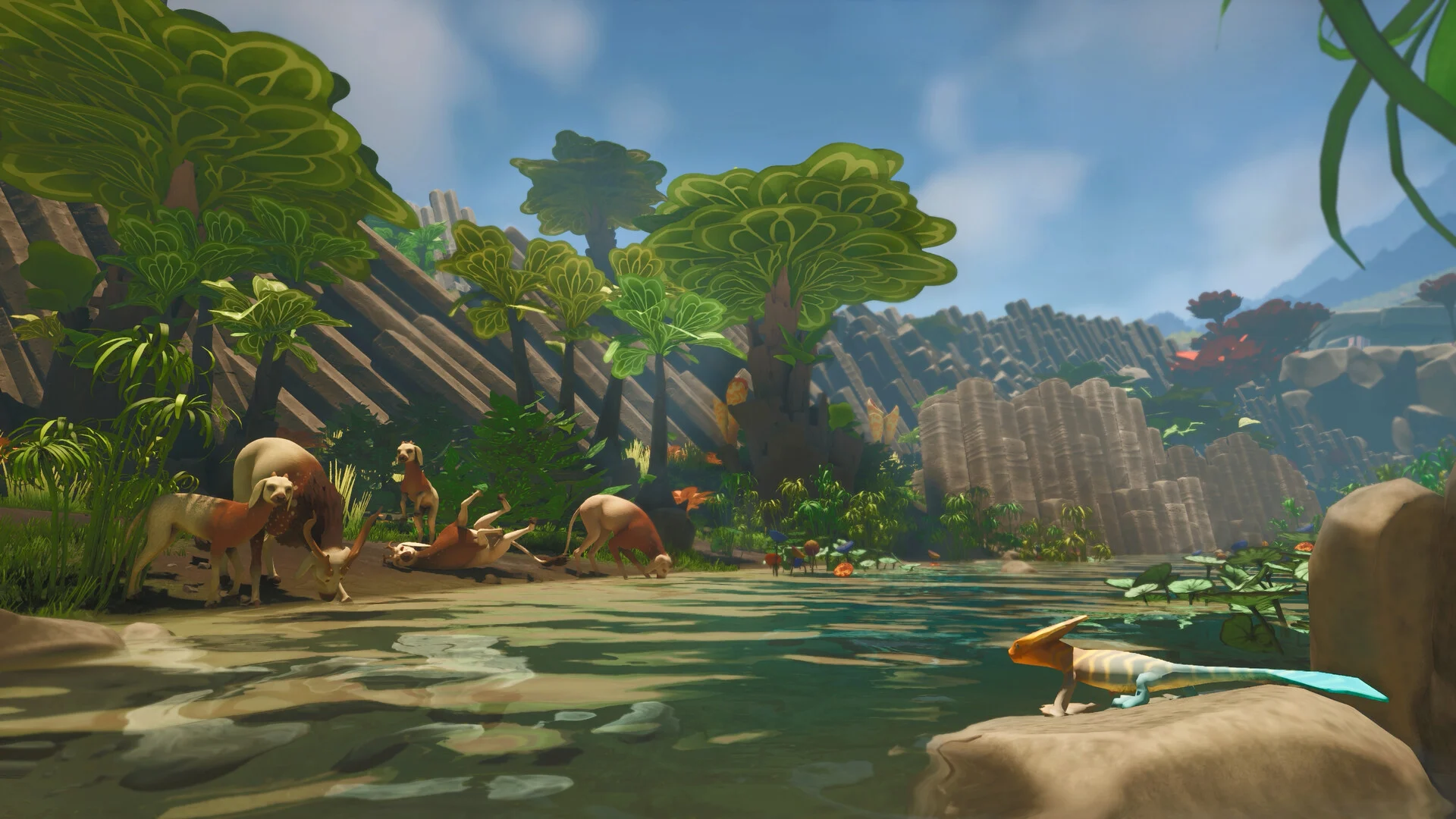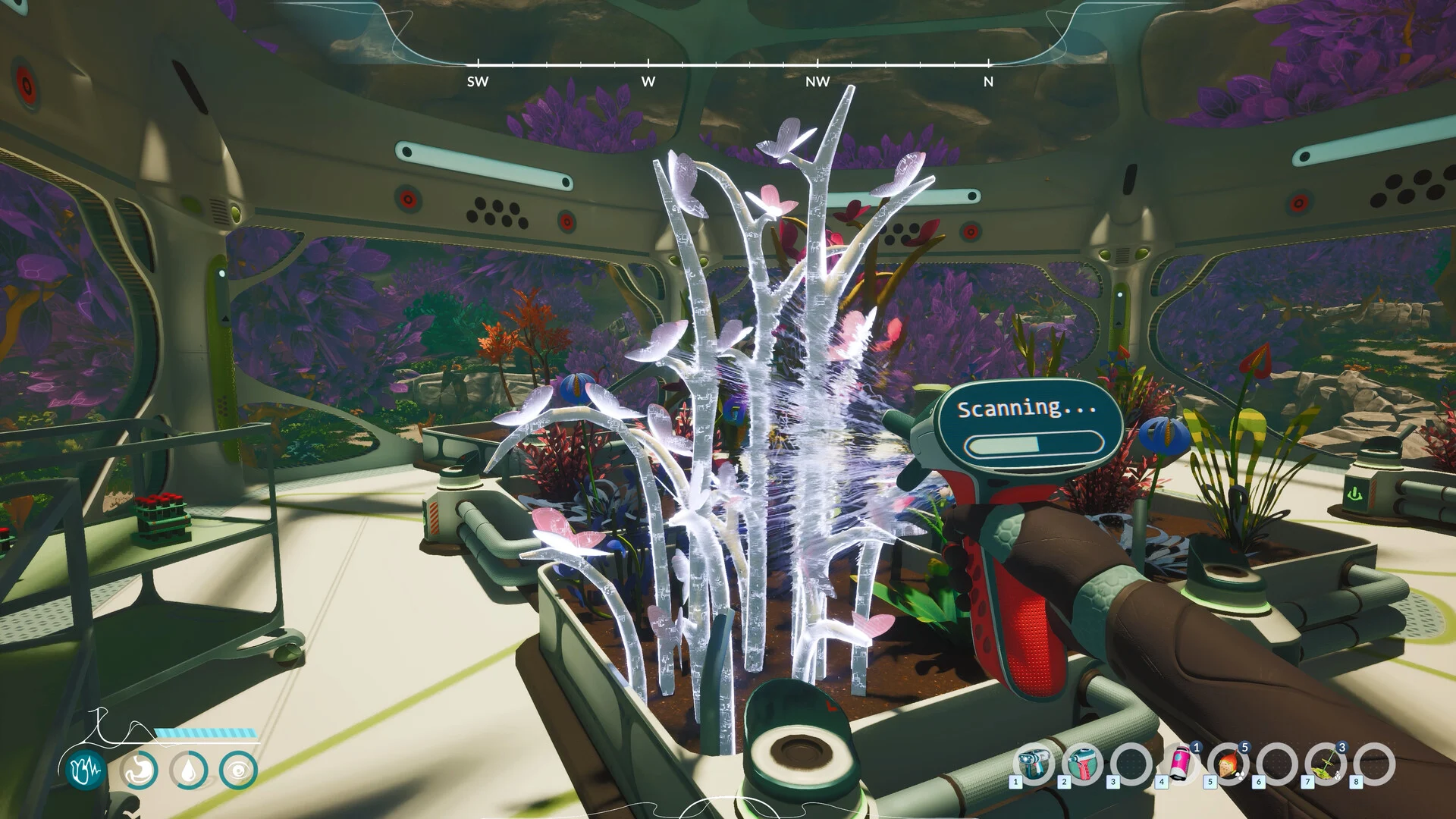
Use habitat clues to narrow your search. The official surveys place different species in clearings, wetlands, caves and rocky or chalk-rich ground. These are search areas, not guaranteed spawn points.
Match the habitat to your target
| Habitat | Documented examples | Region |
|---|---|---|
| Open clearings | Sunbeam Lumus, Sweet Tarax, Lucuma Camilla | Valley |
| Damp watersides and marshes | Wild Green Zuma, Gum Nibis | Valley |
| Wetlands and lakes | Green Naga, Ebony Linter | Headlands |
| Caves and stone formations | Cobalt Sargent; Imperial Strider near stone cover | Headlands |
| Clay uplands / lakes | Earth Filoy | Pass |
| Forest pockets / chalk soil | Prism Nut / Noon Nillow | Pass |
A habitat is not a spawn guarantee
Use these clues to choose where to look, then observe what your game actually places there. The field logs do not give respawn timers or coordinates. Mark your own findings relative to a landmark so you can return.
Region and habitat are different scales
A zone contains more than one kind of habitat. The world guide explains the four named zones, while this page helps narrow your search within them.
Check risks before gathering
Ice Bonebell can be found around predator nests, and some Headlands plants are poisonous raw. The plant reference includes the survey’s use and caution notes.
Sources & verification
Sources checked September 8, 2026. This guide is based on published information, not a full-game playtest. Unverified details are identified above.